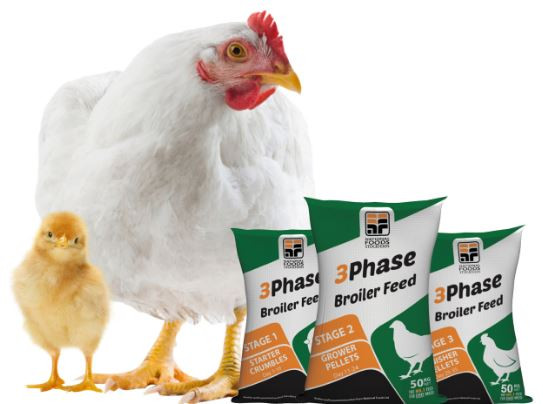
Best Broiler Feed in Zimbabwe: Top 6 Farmer-recommended Brands
According to independent poultry guides and consultants stock feed makes up 65–75% of the total variable cost of producing a kilogram of chicken meat. This means that choosing the best broiler feed in Zimbabwe, determines more of your profit than almost any other factor 0of production.
We used farmer recommendations, industry citations, and documented performance data to rank the main commercial stock feed brands in the country. No bias here – the mentioned companies did not pay us to get a favorable position. Continue reading to find the right kind of feed for your flock. And check out the broiler feed price tracker for current prices across all major suppliers.
Why Feed Brand Choice Matters
A broiler consumes roughly 4.5–5 kg of feed before reaching slaughter weight. Farmers must consider the feed conversion ratio (FCR), the number of kilograms in feed required to produce one kilogram of live weight in each bird. A brand that costs slightly more per bag but converts at 1.7:1 (1.7kg of feed to 1kg of live weight) is almost always cheaper in total than a lower-priced option that converts at 2.0:1.
The Capital Foods Broiler Management Guide, produced by a Zimbabwe-based animal health company with direct farm experience, puts it bluntly:
“Cheap feed is very expensive. Feed company representatives will take up a lot of your time trying to convince you how good their feeds are. Don’t listen to them. Listen to your chickens. Your chickens will tell you very quickly if the feed you are using is good or not.”
This is the right starting framework, and with it in mind, we will now examine six contenders for title of Best Broiler Feed in Zimbabwe. Let’s see what the data says about each brand.
The Best Broiler Feed Brands in Zimbabwe
After careful research, we managed to put together a list. These stock feed brands appear frequently across independent Zimbabwean farming guides, business consulting sites, and agricultural education resources, generally in this order;
- Profeeds
- National Foods Stockfeeds
- Irvine’s Broiler Feed
- Agrifoods
- Novatek Animal Feeds
- FeedMix
The Top 6 Broiler Feed Companies in Detail
Here are short reviews of the most recommended companies that produce the best broiler feed in Zimbabwe.
1. Profeeds — Most Popular Brand in Zimbabwe
Profeeds launched in 2007 as a stock feed manufacturing plant, initially producing 150 metric tonnes (MT) of chicken feed per month for a small number of commercial farmers. By end of 2019 the company was manufacturing 136,000 MT of feed annually.
Operating 45 retail stores nationwide, the company prides itself on being the largest stock feed manufacturer in Zimbabwe.
What independent sources say: Of all the brands in this comparison, Profeeds is recommended most frequently on farming business guides, agricultural consulting websites, and Zimbabwean farming education platforms. The brand typically tops the list alongside National Foods and Novatek.
Performance data: Profeeds publishes the most specific performance claims than any brand in this comparison. The company’s own field data states slaughter weights at 5 weeks of approximately 1.8 kg minimum. The three-phase pellet system, specialized for the small-scale farmers, is documented to achieve FCR of 1.6–1.7.
Profeeds argues that pellets reduce wastage, requiring 30% less energy for the bird to digest the same nutritional value, compared to mash. And the heat process involved in pelleting improves hygiene.
Feed phases: the brand offers a 3-phase pellet format, with Starter, Grower, and Finisher stages. Previously, it offers a 2-phase mash system.
Scale of real-world use: Profeeds documents feeding 4,125,071 birds placed within their out-grower schemes from 5,775,100 MT of broiler feed across one financial year. This is the largest documented single-source volume figure in the comparison.
Distribution: 45 retail stores cover all major farming regions in Zimbabwe, from Beitbridge and Chiredzi in the south to Kariba and Centenary in the north. Profeeds oultlets also sells Irvine’s Cobb 500 day-old chicks, making chick and feed procurement a single visit.
Technical support: The company trains between 7,500 and 9,000 small-scale chicken farmers annually through free seminars, run in partnership with Irvine’s Zimbabwe.
Verdict: This is the best broiler feed in Zimbabwe according to recommendations by independent reviewers. The stock feed manufacturer also has the widest retail footprint. Its FCR of 1.6–1.7 published for their pellet range is the best documented figure on our list.
2. National Foods Stockfeeds — Well Established and Widely Trusted
National Foods Stockfeeds is part of National Foods Holdings, one of the largest food processing companies in the country. The stockfeeds division supplies broiler feed, layer feed, and feeds for other livestock. The 3-phase broiler programme is specifically positioned to deliver bigger birds in 5 weeks.
What independent sources say: Agropreneur Zimbabwe lists National Foods and Profeeds as “reputable companies” supplying the “specially manufactured feeds” needed for fast-growing broiler hybrids. M&J Consultants’ farming guide names National Foods, Novatek, and Profeeds as the three brands commonly used in Zimbabwe.
Feed format: The manufacturer offers both complete ready-to-feed broiler rations and a concentrate system. The concentrate option, where the farmer mixes the concentrate with their own crushed maize at specific ratios, is a low cost option relevant to farmers in grain-producing areas.
The concentrate mixing ratios are:
- Starter phase are mix 2 parts concentrate to 3 parts crushed maize by mass;
- Finisher phase – mix 1 part concentrate to 2 parts crushed maize by mass.
What the product page says: On it’s website, National Foods Stockfeeds describes its feed as “highly nutritious and well balanced” and provides technical advice to ensure profitability. The brand’s 3-phase broiler regime explicitly claims bigger birds in 5 weeks.
Verdict: This brand produces the second best broiler feed in Zimbabwe, as it is placed next to Profeeds by most independent sources. The concentrate option is a real differentiator for budget-conscious farmers who grow their own maize. No other brand in this comparison provides its concentrate mixing ratios as clearly.
3. Irvine’s Broiler Feed — Certified Breed-Matched Feed
Irvine’s launched a broiler feed to complement its Cobb broiler chicks after its Feed Mill won the NAQA Certificate of Excellence. Located at the Derbyshire Farm in Waterfalls, Harare, Irvine’s produces 228 tonnes of feed annually.
Good for Cobb growers: Irvine’s broiler feed is specifically formulated to complement the growth curve and nutritional requirements of the Cobb 500 broiler. If you are growing Irvine’s Cobb chicks, then feeding Irvine’s own broiler feed means your feed and bird genetics are designed by the same company to work together. This is not a trivial point: different broiler lines have different protein requirements, amino acid ratios, and growth trajectories.
Certification: The Irvine’s Feed Mill holds the NAQA Certificate of Excellence. The company’s broader operations carry ISO17025, ISO22000, and FSSC22000 certifications to cover the hatchery and processing plant.
Distribution: The feed is available through Irvine’s own Growers’ Shops in Harare, Mutare, and Bulawayo. You can also find it at Profeeds’ nationwide network of 45 stores. However, Profeeds stores sell Irvine’s chicks but Profeeds’ does not always sell Irvine’s feed. So, farmers should confirm availability at their nearest store.
Independent citations: Irvine’s feed is less frequently cited by name as a standalone supplier compared to Profeeds and National Foods. This is likely because the brand is strongly associated with the contract grower programme where Irvine’s supplies both chicks and feed as a package. Users are on contract and not independently selecting feed brands.
Verdict: Clearly, for Cobb farmers growing chickens on contract or for open-market, Irvine’s breed-matching formulation is the best option. The nutrition enrichment in this product is a genuine advantage. However Irvine’s could not top the list as the best broiler feed in Zimbabwe, since there are a lot Farmers who are running a different broiler line.
4. Agrifoods — Underrated Specialist with great Accessibility
Agrifoods is a Zimbabwean stock feed manufacturer operating as part of CFI Holdings, the same group that owns Suncrest Chickens and Hubbard Zimbabwe. Its broiler feed range is described as “specially formulated nutritional feeds designed to support rapid growth and optimal weight gain in broiler chickens” with balanced protein, energy, vitamins, and minerals.
What makes the company distinctive: Agrifoods offers one of the best broiler feed in Zimbabwe. And with a civil servant credit scheme, qualifying customers can access the product without cash at any Agrifoods branch or approved retailer. All that’s required is an ID and payslip.
This brand lowers starting capital requirements for teachers, nurses, and government workers running small broiler projects. Agrifoods also provides a free online broiler feed calculator, allowing farmers to crunch the numbers and determine how much feed they need so they can plan accordingly.
Research connection: Agrifoods appears in Zimbabwe-based academic research on broiler nutrition. The Harare Institute of Technology (HIT) study on fermented soybean meal used Agrifoods Phase 2 Broiler Grower (20% CP) as the commercial control feed. This means that Agrifoods is recognised benchmark in research settings.
Independent citations: Agrifoods appears in the StartupBiz Zimbabwe broiler farming guide as one of the “popular brands of broiler feeds in Zimbabwe” alongside Profeeds, National Foods, and FeedMix.
Verdict: Although this manufacturer’s name is less frequently mentioned than National Foods in farming guides, it has the most accessible feed, particularly for farmers in the civil service. The brand is backed by a research connection that suggests consistent formulation quality.
5. Novatek Animal Feeds — Good for Beginners
Novatek Animal Feeds Zimbabwe is based in Bluffhill Industrial Park, Harare. Its operations started in November 2012, and is focused on broiler feed, pullet feed, and layer feed for the domestic market. The company is separate from the larger Novatek entity in Zambia, though they share the brand name.
What independent sources say: Novatek is recognized by multiple independent sources as one of the top three brands to produce the best broiler feed Zimbabwe. M&J Consultants’ two independent farming guides both list Novatek as a “reputable” brand suitable for Zimbabwean farmers. Novatek also appears in the StartupBiz Zimbabwe broiler guide as a recommended chick supplier rather than feed supplier. This reflects the dual nature of the brand’s footprint on the poultry market.
Product format: Like National Foods, Novatek markets a broiler concentrate , mixed with farmer’s own hammer-milled maize at a 4mm sieve size, for cost-effective on-farm feed production. This makes the product perfect for farmers with their own maize supply.
Tech tools: Novatek is the only brand in this comparison to offer poultry-facing tech tools. The company has developed two free mobile apps on the Google Play Store covering both broiler and layer management.
Verdict: As recommended in independent guides, Novatek is great for small-to-medium scale farmers, particularly those who want a concentrate option. The mobile app is a practical bonus for farmers who need poultry management support.
6. FeedMix — A Worthy Regional Contender
FeedMix is a Zimbabwe-based brand that appears in farming guides and directory listings specifically as a broiler feed option. The StartupBiz Zimbabwe broiler guide commends FeedMix as one of the “popular brands of broiler feeds in Zimbabwe.”
What is known: FeedMix’s own website information focuses on poultry production and management guidance rather than detailed nutritional specification data. The site addresses FCR, advising farmers to manage feed spillages to improve feed efficiency. FeedMix also encourages farmers to keep detailed records on; “daily/cumulative mortality rate, average daily/weekly gain, PEF, FCR, slaughter weights, batch number, and number of feed bags used.”
Verdict: We put this product on our best broiler feed in Zimbabwe list, due to its appearance in multiple independent Zimbabwean sources as a recognised brand. Unlike with the other 5 brands, there’s little information in terms of FeedMix’s public performance, retail footprint, and certification. This product is worth exploring for farmers in regions where the larger brands have limited coverage.
Rankings Summary
After going through these 6 reviews, you now have an idea of what each manufacturer has to offer. Below is a closer comparison of all the brands, you can see how feed conversion ratio makes Profeeds the best broiler feed in Zimbabwe.
| Rank | Brand | Key Strength | Best For |
|---|---|---|---|
| 1 | Profeeds | Most cited, 1.6–1.7 FCR documented, 45 stores, 136,000MT/yr | All farm sizes; Irvine’s Cobb and other broiler lines |
| 2 | National Foods Stockfeeds | Long-established, 3-phase regime, strong concentrate option | Farmers with own maize; established operations |
| 3 | Irvine’s Broiler Feed | Breed-matched to Cobb genetics, NAQA certified | Irvine’s Cobb contract and open-market growers specifically |
| 4 | Agrifoods | Civil servant credit, feed calculator, research benchmark | New entrants; civil servants starting projects |
| 5 | Novatek | Consistently recommended, concentrate option, mobile app | Small-medium scale; farmers with own maize |
| 6 | FeedMix | Named in multiple guides as recognised option | Regional availability; worth local price checking |
Choosing the best broiler feed in Zimbabwe
Naturally, different individuals have varying opinions on what the best broiler feed in Zimbabwe should be. However, there are a few factors that farmers need to consider before settling on any option.
Feed Conversion Ratio (FCR): FCR is the most important number for farmers selecting broiler feed. A 1.7 FCR means 1.7 kg of feed converts to 1 kg of live bird weight. And so a 2.1 FCR is less economical as you would need more feed to get 1kg of live weight. Profeeds published a 1.6–1.7 FCR range for their pelleted product and National Foods implicitly targets similar outcomes. Always research on FCR field data before picking a feed brand.
Pellet vs mash: Pellets reduce feed wastage and require less digestive energy from the bird. Mash is generally cheaper per bag but can be wasted at the feeder more easily. Profeeds has moved from 2-phase mash to 3-phase pellet, producing a measurable FCR improvement. If your budget allows, pellets are generally worth the price differential.
Complete feed vs concentrate: If you grow your own maize or can source it cheaply and locally, a concentrate (available at National Foods and Novatek) costs less in total than complete feed. But if you don’t have reliable maize supply, complete feed removes the risk of incorrect mixing ratios affecting nutrition.
Phase programme: All leading brands now offer a 3-phase programme, with Starter, Grower, and Finisher. Avoid any suppliers that only offer 2-phase if you want competitive slaughter weights. The Starter phase is the most critical because getting the right protein and energy levels in the first two weeks sets the trajectory for the entire batch.
Availability near you: The best-performing feed in Harare may not be the best-performing feed in Gwanda, where the nearest supplier is 200km away. Profeeds’ 45 stores span the widest geographic coverage; Irvine’s Growers’ Shops are in three cities; but others brands rely on retailers and stockists to move their products.
What Farmers and Experts Say Across Independent Sources
The pattern across independent Zimbabwean farming guides, business consultancy content, and agricultural education and research platforms is consistent:
- Profeeds and National Foods are the top two most “reputable feeds for broiler farming in Zimbabwe”. The brands appear together in multiple independent sources
- Novatek is consistently included as the third option in various poultry feed guides.
- Agrifoods is cited by StartupBiz Zimbabwe but less often by other independent guides — possibly because its retail footprint is less visible to the small-scale farmer segment most guides target
- Irvine’s feed is most relevant specifically for Irvine’s chick growers, and its visibility is partly lower because it travels through the contract grower channel rather than open retail
- FeedMix is named but without the depth of independent commentary the top three attract
Free tips: Picking the right feed brand
According to Capital Foods, a local poultry company with no stake in any of the retail feed brands in this comparison, the farmer should take these steps when picking if you want to get the best broiler feed in Zimbabwe.
- Ignore sales representatives
- Watch your birds’ growth and behaviour
- Record your FCR batch by batch. Over two or three batches
- Your own data will tell you which brand is working for your specific conditions.
Frequently Asked Questions
What is the best broiler feed in Zimbabwe?
Based on expert insights and performance data, Profeeds is the most popular brand, with a documented FCR of 1.6–1.7 on the pellet range. National Foods Stockfeeds ranks as the second best option. Also recommended, Irvine’s has formulated a broiler feed to match the nutritional requirements of its Cobb chicks.
How much feed does a broiler need in Zimbabwe?
A broiler consumes roughly 4.5–5 kg of feed from day-old to slaughter weight (typically 5–7 weeks). Therefore, 100 birds need roughly 450–500 kg of feed per cycle. You can use Agrifoods’ free broiler feed calculator or consult your supplier’s feeding guide for phase-by-phase quantities.
What does FCR mean and why does it matter?
Feed Conversion Ratio, is the number of kilograms of feed that a chicken needs to gain one kilogram of live weight. A feed brand with low FCR saves money even if it’s slightly pricier. Using a 2.2 FCR feed option instead of one with 1.7 FCR means that you need an extra 0.5kg of feed per bird. For 500 birds, this is a significant 250 kg of feed.
Is pellet or mash better for broilers in Zimbabwe?
Pellets generally outperform mash on feed conversion ratio. Pellets also reduce wastage at the feeder and, according to Profeeds, reduces the bird’s digestive energy expenditure by approximately 30%. Mash is cheaper per bag but typically costs more in total feed consumed per batch. If your margin allows, pellets are the better choice.
Can I mix my own broiler feed in Zimbabwe?
Yes, and both National Foods Stockfeeds and Novatek offer concentrates specifically designed to be mixed with the farmer’s own hammer-milled maize. National Foods provides directions on mixing ratios by mass for both Starter and Finisher phases. Only mix feed if you have access to maize supply and an accurate scale. Mixing by volume rather than mass produces inconsistent nutritional content.
