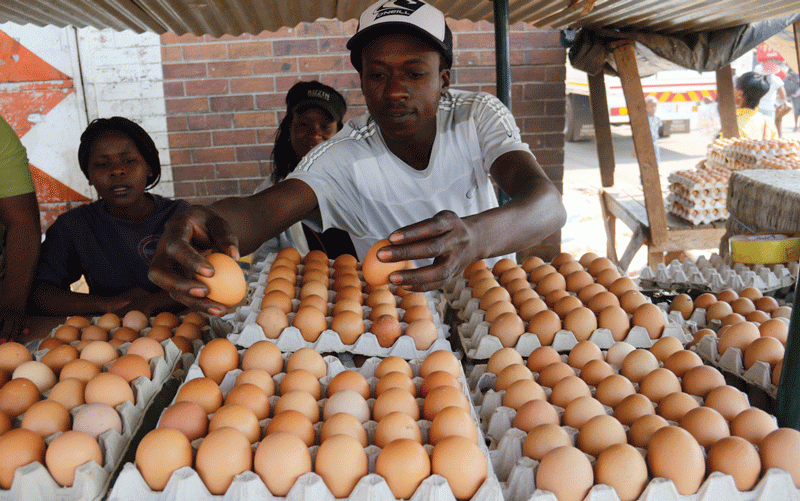
Egg Prices in Zimbabwe: Weekly Tracker and Trends (2026)
Eggs are Zimbabwe’s most accessible everyday protein — cheaper per unit than broiler meat, available at every tuck shop and supermarket, and produced locally by thousands of layer farmers across the country. But egg prices in Zimbabwe move. Feed costs, flock size, seasonal demand, and the broader performance of the poultry sector all push the price of a tray up or down week to week.
This page is updated every week with current wholesale and retail egg prices across Zimbabwe’s major markets. Whether you are a layer farmer checking what the market will bear, a buyer sourcing for retail or institutional catering, or a household monitoring your grocery budget, this is the reference you need before you negotiate or buy.
For live broiler and roadrunner chicken prices alongside eggs, visit the main Zimbabwe poultry price tracker.
Current Egg Prices in Zimbabwe — Week of 23 June 2026
Prices are in USD. Tray = 30 eggs. All prices are indicative based on market sampling and verified seller listings. Actual prices vary by quantity, seller, and location.
Wholesale Prices (Per Tray of 30 Eggs)
| Grade | Harare | Bulawayo | Gweru | Mutare |
|---|---|---|---|---|
| Large (AA/A) | $3.60 – $4.00 | $3.50 – $3.90 | $3.40 – $3.80 | $3.50 – $3.90 |
| Medium (B) | $2.80 – $3.20 | $2.70 – $3.10 | $2.60 – $3.00 | $2.70 – $3.10 |
| Small / pullet | $2.00 – $2.50 | $1.90 – $2.40 | $1.90 – $2.30 | $2.00 – $2.40 |
Minimum wholesale order: most commercial suppliers require a minimum of 5 to 12 trays per transaction. Single-tray wholesale is typically only available from small-scale farmer direct sales.
Retail Prices (Per Tray and Per Egg)
| Channel | Per tray (30 eggs) | Per dozen (12 eggs) | Per single egg |
|---|---|---|---|
| Supermarket (Harare) | $4.20 – $5.50 | $2.80 – $3.60 | $0.14 – $0.18 |
| Tuck shop / informal (Harare) | $3.80 – $4.50 | $2.50 – $3.00 | $0.12 – $0.15 |
| Farm gate (peri-urban) | $3.20 – $3.80 | $2.10 – $2.50 | $0.10 – $0.13 |
| Informal market (Bulawayo) | $3.60 – $4.20 | $2.40 – $2.80 | $0.12 – $0.14 |
Supermarket prices are confirmed from SPAR Zimbabwe and TM Pick n Pay online listings. Informal market prices are sampled from Harare (Mbare, Glen Norah, Kuwadzana) and Bulawayo (Entumbane, Nkulumane) market vendors.
Week-on-Week Price Movement
| Market | Large wholesale (tray) | Change vs last week |
|---|---|---|
| Harare | $3.80 avg | → Stable |
| Bulawayo | $3.70 avg | ↑ +$0.10 |
| Gweru | $3.60 avg | → Stable |
| Mutare | $3.70 avg | ↓ −$0.05 |
What Is Moving Egg Prices Right Now
Feed cost pressure remains the primary driver. Layer hens consume approximately 110–120g of feed per day. At current maize prices in Zimbabwe — elevated by the grain marketing regulations described in our grain laws and feed cost analysis — feed represents 60 to 70 percent of a commercial layer farmer’s operating cost. When maize prices rise, egg prices follow within 4 to 6 weeks as higher input costs work through the production cycle. When maize eases, egg prices typically follow with a similar lag.
Winter demand effect. Zimbabwe’s winter months (May–August) see increased household protein demand as cold weather lifts appetite. Eggs benefit from this seasonality — they are a fast, cheap, hot meal. The Bulawayo price uptick this week is consistent with typical winter demand in a colder city. Layer farmers should be maximising production now while the seasonal premium holds. For a full winter profitability strategy, see our guide on maximising broiler and layer profits this 2026 winter.
Flock recovery from disease. The performance of Zimbabwe’s laying flock — currently recovering from earlier-year destocking events — affects the supply side of egg pricing. Fewer in-lay birds means tighter supply and firmer prices. Tight supply is one reason wholesale prices have held above USD 3.50/tray for large eggs in Harare since April. Our Zimbabwe poultry supply crisis analysis covers the structural supply constraints affecting both broilers and layers.
Local sourcing policy. Government policy on local production mandates is affecting the competitive dynamics between local eggs and any imported product. Our article on Zimbabwe’s new local sourcing rules explains what this means for pricing and market access.
Understanding Zimbabwe’s Egg Price Structure
For buyers and sellers who want to understand not just the current price but why it is where it is, the following breakdown covers the fundamentals.
The Cost of Producing a Tray of Eggs in Zimbabwe
At current input prices, the estimated cost of production for a commercial layer farmer in Zimbabwe producing large-grade eggs is:
| Cost item | Estimated cost per tray (30 eggs) |
|---|---|
| Feed (layer mash, 110g/bird/day over ~30-day laying period) | $1.80 – $2.20 |
| Day-old chick amortised cost (depreciated over laying period) | $0.40 – $0.60 |
| Medication and vaccination | $0.10 – $0.15 |
| Labour (per tray equivalent) | $0.15 – $0.25 |
| Housing and equipment depreciation | $0.10 – $0.20 |
| Mortality allowance (typically 3–5% of flock) | $0.15 – $0.20 |
| Total estimated cost of production | $2.70 – $3.60 per tray |
At the current large-grade wholesale price of USD 3.60 to USD 4.00 per tray in Harare, a well-managed commercial layer operation is earning a margin of roughly USD 0.40 to USD 1.30 per tray before overheads. That margin is tight. Any increase in feed cost or disease mortality can push the operation into loss territory — which is why disease management and feed cost control are the two variables layer farmers must watch most closely.
For the full picture on what drives egg and chicken costs, see our analysis on what is really driving the cost of your chicken and eggs.
Why Harare Prices Are Consistently Higher Than Other Cities
Transport cost from production area to market, combined with Harare’s higher demand density, creates a persistent Harare price premium of roughly USD 0.20 to USD 0.40 per tray above Bulawayo and Gweru for equivalent grades. Harare is not a major layer production area — most commercial layer farms are in peri-urban areas and satellite towns. The transport margin is real and consistent.
For layer farmers in Mashonaland provinces, Harare represents the highest-paying market. Delivering directly to Harare buyers rather than selling at the farm gate typically adds USD 0.30 to USD 0.50 per tray — net of fuel cost on a loaded trip — which can make the difference between a thin margin and a viable one. Our market access guide covers how to connect with Harare buyers as a peri-urban producer.
Grading and Why It Matters for Price
Zimbabwe’s commercial egg market grades eggs as Large (AA/A), Medium (B), and Small/Pullet. The price differential between grades is substantial — often USD 0.80 to USD 1.20 per tray — which makes grading discipline a direct revenue lever for layer farmers.
The grade of your eggs is determined primarily by the age and genetics of your laying flock. Young hens (peak lay, 24–40 weeks) produce medium to large eggs. Mature hens (above 60 weeks) produce larger eggs but at reduced lay rates and with higher feed conversion ratios, making them increasingly uneconomical to hold beyond 72 to 80 weeks for most commercial operations.
Hybrid layer breeds available through Zimbabwe’s registered hatcheries — particularly the Lohmann Brown and ISA Brown lines commonly available through suppliers in our Zimbabwe poultry breeders directory — consistently produce large-grade eggs through their production peak. Roadrunner and indigenous breed eggs are smaller but command a different market: buyers who specifically want indigenous eggs for taste preference will pay a premium that occasionally exceeds the commercial large-grade price.
Egg Price History: Zimbabwe 2024–2026
Understanding where prices are today requires knowing where they have been. The following summary covers the key price movements over the past two years.
Q1 2024: Egg prices were under moderate pressure from maize cost increases following the 2023/24 drought season. Large-grade wholesale in Harare averaged USD 3.00 to USD 3.40 per tray. Many smallholder layer farmers reduced flock sizes as feed costs squeezed margins.
Q2–Q3 2024: Partial flock recovery and stabilised maize prices brought some relief. Wholesale prices settled at USD 3.20 to USD 3.60 in Harare. The seasonal demand spike in June–August provided a brief premium.
Q4 2024: Year-end demand (school fees season, festive season) drove prices toward USD 3.80 to USD 4.20 in Harare. Commercial layer flock restocking began in anticipation of 2025 demand growth.
Q1 2025: Avian influenza concerns and disease pressure on some commercial flocks tightened supply and pushed prices to USD 4.00 to USD 4.50 per tray at peak in Harare. Smallholder producers without biosecurity infrastructure were disproportionately affected. Our Zimbabwe poultry disease management guide covers the biosecurity practices that protect against flock losses of this type.
Q2–Q4 2025: Gradual normalisation as flock numbers recovered. Prices eased to USD 3.60 to USD 4.00 range in Harare. Feed costs remained a floor constraint throughout.
Q1–Q2 2026: Current price environment. Large-grade wholesale stable at USD 3.60 to USD 4.00 in Harare. Winter seasonal premium beginning to show. Feed costs still structurally elevated due to grain marketing policy — see our grain laws analysis for the policy background.
How to Buy Eggs in Zimbabwe: Buyer’s Guide
For Household Buyers
The cheapest source of eggs for a household is direct from a local layer farmer or from an informal market vendor who sources directly from farms. Supermarket eggs are typically 20 to 40 percent more expensive than farm-direct or informal market prices for equivalent quality.
If you are buying from an informal vendor, look for:
- Clean, uncracked shells with no visible soiling
- Eggs that have been stored in a cool, shaded location
- A vendor who can tell you where the eggs came from (farm name or area)
A simple freshness test: place an egg in a glass of water. Fresh eggs sink flat. Eggs more than two weeks old start to tilt. Eggs that float should not be eaten.
For Institutional and Commercial Buyers
Hotels, schools, hospitals, and food processors buying more than 50 trays per week should be sourcing directly from commercial layer farms or registered egg distributors rather than through retail channels. Direct sourcing saves USD 0.50 to USD 1.50 per tray compared to retail and provides supply consistency.
Register on our Zimbabwe poultry buyers directory to connect with verified layer farmers and egg distributors active in your area. Layer farmers looking to supply institutional buyers should review our market access guide for the documentation and quality requirements institutional buyers typically require.
For Layer Farmers: Maximising Your Egg Revenue
The difference between a profitable and a marginal layer operation in Zimbabwe often comes down to three decisions that most smallholder farmers do not optimise: selling channel, timing, and grading.
Sell channel. Farm-gate prices are the lowest you will receive. Delivering to an informal market vendor gives you a 10 to 20 percent premium. Supplying a tuck shop cluster gives you a further 10 to 20 percent. Supplying a supermarket or institutional buyer directly (once you have the volume and consistency to qualify) gives you the highest and most stable price but requires consistent supply, invoicing capability, and usually a basic quality certification. Work up the channel ladder as your flock size and management capacity increase.
Timing. Egg prices in Zimbabwe follow a seasonal pattern. Winter (May–August) and year-end (November–December) are the two peak demand periods. If you have control over your restocking timing, put new pullets on laying feed in March (to hit peak production in May) and in September (to hit peak in November). Aligning your peak production with peak demand is the single most impactful revenue optimisation available to a layer farmer.
Grading. Selling mixed grades at a blended price loses you money on every tray of large eggs. Grade your eggs and price large separately. Even a USD 0.50 per tray differential — modest by current market standards — adds up to USD 50 per 100 trays. With 500 large-grade layers at peak production, that differential is worth USD 300 to USD 400 per month.
For a detailed profitability model and seasonal strategy, read our guide on maximising broiler and layer profits this 2026 winter.
Eggs vs Chicken: Which Is the Better Investment in Zimbabwe Right Now?
Both eggs (from layers) and meat (from broilers) have a place in a diversified poultry operation, but their risk and return profiles are different.
Layers require a longer setup time (pullets take 18 to 22 weeks to reach point of lay), but once in production they generate daily income across a 12 to 18-month productive period. The capital is tied up longer but the income is steadier. Disease risk is the primary threat — a Newcastle disease outbreak in an unvaccinated layer flock can wipe a year’s investment in days.
Broilers have a 35-day production cycle. Capital turns over eight times per year. Income is lumpy (you get paid at slaughter, not daily) but the cycle is short enough to recover quickly from a bad batch. Broiler margins are currently under pressure from feed costs.
For a complete side-by-side comparison covering both production systems, see our broilers vs huku yechibhoyi guide. And for the disease management protocols that protect both layer and broiler investments, our Zimbabwe poultry disease management guide covers the essential vaccination and biosecurity schedule.
Where to Find Egg Suppliers and Buyers in Zimbabwe
Layer farmers looking for buyers: Register your operation on our Zimbabwe farmers directory to be found by institutional and commercial buyers. Buyers on the platform are verified and include supermarket procurement teams, hospitality operators, and food processors.
Buyers looking for layer farms: Browse our Zimbabwe poultry buyers directory and breeders directory for registered producers. Use the resources page for the Zimbabwe Poultry Association contact and other industry body connections that can refer you to established commercial suppliers.
Veterinary and extension support: Layer farmers needing vaccination scheduling, flock health assessments, or biosecurity audits can find licensed veterinary services through our Zimbabwe veterinary services directory.
Industry news and events: Follow the latest egg production news, ZPA market updates, and industry events on our Zimbabwe poultry news page and events calendar.
Frequently Asked Questions
What is the current price of eggs in Zimbabwe? As of the week of 23 June 2026, large-grade eggs wholesale in Harare are selling at USD 3.60 to USD 4.00 per tray of 30. Retail supermarket prices range from USD 4.20 to USD 5.50 per tray. Informal market prices fall between USD 3.80 and USD 4.50 per tray. Prices are updated on this page every week.
How much does a tray of eggs cost in Zimbabwe? A tray of 30 eggs (large grade) costs between USD 3.60 and USD 4.00 wholesale in Harare, and between USD 4.20 and USD 5.50 at supermarket retail. Farm-gate prices from peri-urban producers are typically USD 3.20 to USD 3.80.
What is the price of a single egg in Zimbabwe? At current market rates, a single large egg retails at approximately USD 0.14 to USD 0.18 at supermarkets in Harare, and USD 0.12 to USD 0.15 at informal market vendors.
Why are egg prices higher in Harare than in Bulawayo or Gweru? Transport cost from production areas to Harare, combined with higher population density and demand in the capital, creates a persistent Harare price premium of roughly USD 0.20 to USD 0.40 per tray.
What is the cheapest way to buy eggs in Zimbabwe? Buying directly from a layer farmer at the farm gate is typically the cheapest source. Informal market vendors who source directly from farms are the next most affordable. Supermarket prices are the highest but offer the most consistency in grade and freshness.
How is egg price different from chicken meat price? Eggs are priced per unit (per egg or per tray) rather than per kilogram, and their pricing is more stable week to week than broiler prices, which spike sharply after disease events or supply disruptions. Both are driven by the same feed cost inputs, but eggs have a longer production lag — feed cost increases hit egg prices 4 to 6 weeks later as they work through the layer cycle.
This page is updated every week with current market price data. For the latest broiler and roadrunner chicken prices, visit the main Zimbabwe chicken price tracker. To list your eggs for sale or to find verified egg buyers, register your business on the ChickenPrices.co.zw farmers network.
Last updated: 23 June 2026. Next update: 30 June 2026.

One response to “Egg Prices in Zimbabwe: Weekly Tracker and Trends”
[…] producers. Today, Irvine’s operations produce 104 million chicks per year, 6.5 million table eggs per week, and 300 tonnes of frozen chicken […]