Roadrunner vs Broiler: Which Is More Profitable in Zimbabwe Right Now?
Profit-oriented poultry farmers in Zimbabwe have to weigh roadrunner vs broiler breeds and make a tough choice. On one hand, broilers (meat chickens) are fast-growing, predictable, and pretty easy to sell. On the other, roadrunners (free-range chickens) are slow-growing, but disease resistant, and can fetch a much higher market price.
Both breeds can be profitable and both can fail. It’s all about matching the production system to your specific situation. In this article, we’ll give you the numbers, covering specific costs, margins, and growth timelines. This should help you understand which bird wins under which conditions.
Also take a look at the Zimbabwe chicken price tracker and the day-old chick prices guide for up-to-date information.
Structural Differences Between Roadrunners and Broilers
A broiler is biologically engineered to convert feed into meat as fast as possible. A Cobb 500 or Ross 308 broiler reaches 2.2 to 2.5 kg in 35 days on approximately 4 to 4.5 kg of feed. It has almost no disease resistance and no foraging instinct.
Without consistent management, meat chickens will die. However, this production system gives you eight cycles per year and a predictable cost per-kg for each bird weight gain. Broilers have a supply chain built around them. Backyard farmers can sell directly to consumers while large-scale grower can access formal buyers such as supermarkets and processors.
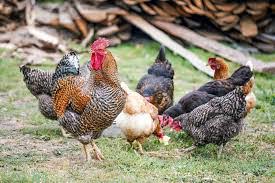
Now, a free-range chicken scavenges, forages, roosts in trees, and has disease resistance capability incomparable to that of a broiler. Roadrunners reach a slaughter weight of 1.3 to 1.8kg in 16 to 22 weeks, roughly four times longer than meat chickens.
Although they require less purchased feed to grow, roadrunners sell for 40 to 70 percent more per bird. The high disease resistance in these birds means that mortality is dramatically lower under normal management. The market for this breed is consistently undersupplied, and demand is driven by taste preference and health perception rather than just price.
After this structural roadrunner vs broiler comparison, you can probably already see which option works best for you, considering the type of operation you are running. And this is the key to an effective profitability analysis.
Understanding which of those trade-offs works in your favour is the entire profitability analysis.
Head-to-Head Cost Comparison: 100 Birds
The most useful comparison is at the 100-bird scale — accessible to most smallholder farmers and large enough to produce meaningful profit data. All figures in USD, based on 2026 market rates in Zimbabwe.
Broiler Cost Model — 35-Day Cycle
| Cost item | Quantity / rate | Total USD |
|---|---|---|
| Day-old chicks (Cobb 500) | 100 × $0.95 avg | $95 |
| Broiler starter feed (0–14 days) | 50 kg × $0.55/kg | $27.50 |
| Broiler grower feed (15–28 days) | 80 kg × $0.52/kg | $41.60 |
| Broiler finisher feed (29–35 days) | 60 kg × $0.50/kg | $30.00 |
| Newcastle/Gumboro vaccines | 1 programme | $8.00 |
| Coccidiosis medication | 100 birds | $6.00 |
| Other medication / vitamins | Allowance | $5.00 |
| Bedding (wood shavings) | 2 bales | $6.00 |
| Electricity / gas brooder (heating) | 35 days | $12.00 |
| Labour (casual, 35 days) | Allowance | $15.00 |
| Mortality allowance (4%) | 4 birds lost | $3.80 |
| Total cost of 100 broilers | $249.90 |
Profit Calculation for 100 broilers
These figures assume farm-gate live bird sales at current Harare wholesale prices. Dressed bird sales at $3.30/kg dressed weight improve revenue but add processing cost and labour.
| item | Amount USD |
| Revenue from surviving flock (96 birds) | $480.00 ($5 per bird) |
| Gross profit per cycle ($480 – 249.90) | $230.10 |
| Gross margin | 48% |
| Cycles per year | 7.5 batches |
| Approximate Annual Gross profit | $1,725.00 |
Roadrunner Cost Model — 18-Week Cycle
| Cost item | Quantity / rate | Total USD |
|---|---|---|
| Day-old roadrunner chicks (F1 improved) | 100 × $1.10 avg | $110 |
| Brooding feed / starter (0–4 weeks) | 40 kg × $0.50/kg | $20.00 |
| Grower feed (5–12 weeks, supplemental only) | 80 kg × $0.48/kg | $38.40 |
| Finisher supplement (13–18 weeks) | 40 kg × $0.48/kg | $19.20 |
| Newcastle vaccine | 1 programme | $5.00 |
| Other medication (roadrunners require less) | Allowance | $4.00 |
| Bedding (minimal — partially free range) | 1 bale | $3.00 |
| Electricity / brooder (first 3 weeks only) | 21 days | $7.00 |
| Labour (lower intensity than broilers) | Allowance | $10.00 |
| Mortality allowance (2% — lower than broilers) | 2 birds lost | $2.20 |
| Total cost of production | $218.80 |
Profit Calculation for 100 Roadrunners
| Item | Amount USD |
| Revenue from surviving flock (98 birds) at $6.50 each | $637.00 |
| Gross profit per cycle | $418.00 |
| Gross margin | 66% |
| Cycles per year | 2.5 |
| Annual Gross profit | 1,045.00 |
Roadrunner vs Broiler – What the numbers say
Broilers generate more annual gross profit than roadrunners from the same number of birds. And this surprises many farmers since free-range chickens offer a higher profit margin per cycle. However, you run nearly three times as many cycles per year with broilers.
The roadrunner wins decisively on margin per batch but meat chickens win on annual cash generation. So which bird is more profitable? Well, it all depends on what you are optimizing for. The chart below shows you facts and figures side by side.
| Metric | Broiler (100 birds) | Roadrunner (100 birds) |
|---|---|---|
| Cost per cycle | $250 | $219 |
| Revenue per cycle | $480 | $637 |
| Gross profit per cycle | $230 | $418 |
| Gross margin | 48% | 66% |
| Cycles per year | 7.5 | 2.5 |
| Annual gross profit | $1,725 | $1,045 |
| Capital tied up per cycle | Moderate | Low |
| Cash flow frequency | Every 5–6 weeks | Every 18–22 weeks |
| Management intensity | High | Medium–Low |
| Disease risk | High | Low |
| Market pricing risk | Medium (commodity) | Low (premium, undersupplied) |
The right conditions for Broilers
Making the roadrunner vs broiler decision depends on your circumstances and preferences. Here’s how a broiler operation goes;
Feed access and capital
Broilers are a working capital business. You spend approximately $250 and collect $480 forty days later. You can keep the 7.5 cycles per year rhythm by Funding each cycle reliably and getting buyers committed before you stock.
Predictable cash flow
You get up to eight paydays a year. If you have monthly obligations such as loan repayments, school fees, and household costs, the broiler’s short cycle aligns better with these needs.
Formal buyer or contract
Broilers are the perfect fit if you are going for Irvine’s contract farming, supermarket supply, or institutional buyer relationships. Our market access guide covers contract farming options in detail.
Location and access to buyers
The broiler market is thickest in Harare, Bulawayo, and other big towns. If you can deliver live birds to a buyer within an hour, the market is deep enough to take your entire flock consistently.
Managing the disease risk
With poor biosecurity, a single Newcastle or Gumboro outbreak can kill 30-70 percent of the flock in a few days, but proper management reduces mortality rates to 3-5 percent. For detailed biosecurity protocols, see our Zimbabwe poultry disease management guide.
The right conditions for Roadrunners
Roadrunners have completely different financial and operational requirements.
Low Capital per batch with slow returns
The roadrunner cycle costs less to start than a broiler cycle as it requires less purchased feed. If capital is the constraint for you, as it is for most smallholder farmers, roadrunners allow entry with less upfront money. But you have to wait for longer periods to get profits.
Space for free ranging
A roadrunner on partial free range eats 30 to 50 percent less purchased feed than a fully confined bird. If you have a plot, communal grazing access, or a homestead with yard space, the roadrunner’s natural foraging behaviour is a direct profit contributor that a broiler cannot replicate.
Location and access to buyers
Roadrunner demand consistently outstrips supply in Harare’s peri-urban informal markets such as Mbare, Glen Norah, Kuwadzana. They also sell well at rural growth points across Mashonaland, Midlands, and Manicaland. Buyers at these markets are specifically seeking roadrunner birds and will pay USD 6.50 to USD 8.00 per bird. Reneth Mano of the Zimbabwe Poultry Association noted that the roadrunner market “seeks leaner meat” and that the product is “under-supplied.”
Lower-stress management
Roadrunners do not require heating beyond the first three weeks, tolerate temperature variation much better than broilers, and have significantly lower disease vulnerability under normal free-range conditions. For a farmer managing poultry alongside other agricultural activities, roadrunners demand fewer daily interventions.
Special Sales to festivals, occasions, and restaurants.
Due to its premium price, roadrunners are most suitable for channels that specifically want indigenous chicken. Think of funerals and celebrations where huku yechibhoyi is traditionally served, restaurants such as Sis Bee’s Kitchen in Bulawayo, specialising in traditional, and urban consumers who are willing to pay extra for the bird. If you have access to these channels, you can enjoy the roadrunner’s margin advantage.
Ideal for women with Limited capital
Roadrunner farming has historically been a women-led enterprise in Zimbabwe precisely because it aligns with the resource constraints most women farmers face. Lower startup cost, partial self-feeding, and lower mortality make it the more resilient entry point. See our article on women in Zimbabwe’s poultry industry for full details.
The Feed Cost Reality: Where Most Farmers Get the Maths Wrong
Many farmers assume roadrunners eat almost nothing from purchased feed because they forage. However, a roadrunner chick in the first four weeks of life has the same vulnerability to cold and the same nutritional requirements as broiler chicks. Without proper management for the first month, mortality is high — sometimes catastrophically.
From week 1 to 4, roadrunners require full brooding feed with starter crumbles. Between week 5 and 12, you can supplement feed with foraging. In the final 6 weeks, you would still need to get the finisher, but a small amount if the birds have access to free-ranging.
Roadrunner starter and grower feed is available from Agri Universe Zimbabwe and FeedMix at approximately USD $0.48 to $0.50 per kg — comparable to broiler feed per unit but used in much smaller total quantities over the longer cycle.
In a roadrunner vs broiler cost comparison, free range chickens come at an advantage. But if you cut corners in the brooding phase, it only causes losses. Before picking a breed to grow, find out the latest feed prices and learn how grain laws inflate your feed bill.
The Hybrid Strategy: Running Both Systems Together
Many Farmers are generating consistent income from poultry in Zimbabwe in 2026 by running broilers alongside a roadrunner system. Practically, at a smallholder scale, you can grow 200 broilers per 40-day cycle in one pen and 100 roadrunners on a rolling 18-week cycle in a separate pen or free-range area. Broilers will funds the operation while roadrunners fund the growth. Here’s how it works;
- Market access diversifies — you have a product for the commodity broiler buyer and a product for the premium roadrunner buyer. You are never entirely exposed to one market.
- Broilers provide frequent cash flow — every 40 days, there is a payday. This covers operating costs, replenishes working capital, and funds the roadrunner cycle that runs in the background.
- Roadrunners provide high-margin income at longer intervals — providing a profit boost 2 to 3 times per year that the broiler operation cannot match per cycle.
- Disease risk is spread — a Newcastle outbreak that wipes a broiler flock does not affect the roadrunner pen and vice versa, because the systems operate in different areas with different biosecurity zones.
What the Slaughter Weight Difference Actually Means
To make a reliable roadrunner vs broiler analysis, farmers must not overlook slaughter weight. A Cobb 500 broiler reaches 2.2 to 2.5 kg in 35 days. A well-managed improved roadrunner (F1 cross) reaches 1.3 to 1.8 kg in 18 to 22 weeks. Roadrunners produce less meat per bird but still sells at a higher price than broilers.
As you will see in the table below, free range chickens generate twice the revenue per kilogram of live weight. This is the fundamental market premium that justifies the longer grow-out and explains why well-managed roadrunner operations can match or exceed broilers’ annual income.
| System | Live weight | Selling price | Price per kg |
|---|---|---|---|
| Broiler | 2.3 kg avg | $5.00/bird | $2.17/kg |
| Roadrunner | 1.5 kg avg | $6.50/bird | $4.33/kg |
Where Broilers Can Fail You
Broilers predictably bring cash but the birds are susceptible to a number of risks.
- Capital lock-up — you need to find $250 every 40 days to fund the next cycle before the current cycle has paid out.
- Disease mortality — Broilers’ lack of natural immunity make them extremely vulnerable to Newcastle and Gumboro. A 30% mortality event on 100 broilers wipes out roughly $150 of revenue.
- Feed price spikes — broilers consume 4 to 4.5 kg of purchased feed per bird. Any rise in maize or soya prices directly compresses margin with no buffer.
- Selling price depression — the broiler is a commodity. When supply is high and demand is flat, selling prices soften fast but your operating costs do not change.
Where Roadrunners can fail you
Disease resistance and foraging capability are great traits but roadrunners do come with challenges.
- First-cycle brooding mortality — if the brooding phase is poorly managed, mortality in the first four weeks can be high, significantly reducing the number of birds reaching slaughter weight.
- Long capital lock-up — For a 100-bird operation, you’ll have USD $219 tied up for 18 weeks. If a cash emergency arises at week 10, you have no easy exit without selling immature birds at a loss.
- Predation — free-ranging birds are at risk of theft and may be eaten by dogs, cats, and birds of prey. A properly fenced run mitigates this but adds to infrastructure costs.
- Getting the right buyers at premium prices — roadrunners can sell at premium prices but real but at a rural roadside you will not get USD 6.50 per bird. You need to connect with urban informal markets, event buyers, or restaurants. Our market access for Zimbabwean poultry farmers guide covers how to reach these channels.
What’s your Verdict: Roadrunners or Broilers?
Roadrunner vs broiler – which breed is right for you? The two systems have different operational requirements and you need to consider which is most accessible to you. For instance, if you want to invest $250 or more with quick returns, the broiler is perfect for you. And if you have limited capital and can wait for longer to get high returns, then the roadrunner is your bird.
Ideally, you need to get committed buyers or a contract before you start a batch of broilers. To successfully market free-range chickens, you must have access to buyers willing to pay premium prices per bird. If you find yourself sitting on the fence, you can mix the two systems and create a hybrid where roadrunners make up for broilers’ shortcomings, and vice versa.
Where to Buy Chicks and Find Buyers for Either System
Day-old chick sourcing for both broilers and roadrunners is covered in our Zimbabwe day-old chick prices guide — including current prices from Irvines for Cobb 500 broilers and independent hatcheries for F1 roadrunner crosses.
Listing your birds for sale once they are ready connects you with the buyers actively searching on ChickenPrices.co.zw. Register on the farmers directory and list your availability — roadrunner buyers in particular are actively searching because supply is consistently below demand. Our platform listing guide walks through the five-minute registration process.
Buyers for roadrunner birds specifically include informal market vendors at Mbare and other urban informal markets, traditional restaurants and caterers, event and funeral organisers, and individual urban consumers buying direct from farmers. These buyers are browsing the buyers directory on ChickenPrices.co.zw and placing orders through verified seller profiles.
For veterinary support on vaccination schedules for both broilers and roadrunners, the Zimbabwe veterinary services directory lists licensed vets and AGRITEX extension officers by province.
Frequently Asked Questions
Which is more profitable — roadrunner or broiler farming in Zimbabwe?
Broilers generate more annual gross profit because farmers can grow 7.5 batches per year rather than just 2.5 cycles per with roadrunners. However, roadrunners generate a 66% profit margin per batch compared to broilers’ 48%.
What do roadrunner chickens sell for in Zimbabwe?
Live roadrunner birds sell for USD $6.00 to $8.00 per bird at urban informal markets and to premium buyers. Farm-gate sales to intermediaries typically fetch USD $5.50 to $6.50 depending on location and bird size. . For current pricing, check the Zimbabwe chicken price tracker.
How long does it take a roadrunner chicken to reach slaughter weight?
An improved F1 roadrunner cross takes 16 to 22 weeks to reach slaughter weight of 1.3 to 1.8 kg under semi-intensive management with supplemental feeding. Pure indigenous village breeds take longer and reach lower weights.
Can roadrunner farming replace broiler farming in Zimbabwe?
Roadrunners cannot directly replace broilers. The slower growth rates would lower annual volume and income. But many farmers find that roadrunners with a smaller flock can generate comparable income with lower risk, lower feed cost, and less management intensity. Running roadrunners and broilers simultaneously is the most robust model.
Why is the roadrunner market undersupplied in Zimbabwe?
Urban consumer preference for indigenous chicken has grown faster than production. Most roadrunner production is still at smallholder subsistence scale, which means that birds are kept for household consumption or sold in small numbers. Commercial-scale roadrunner production that consistently reaches urban markets is still rare.
For broiler and roadrunner price updates every week, visit the Zimbabwe chicken price tracker. To list your birds and connect with buyers, register on the ChickenPrices.co.zw farmers directory.

2 responses to “Roadrunner vs Broiler: The clash of 2 birds”
[…] Roadrunner carcasses. The most premium raw material. Roadrunner bones produce a darker, stronger-flavoured stock that commands a higher selling price. If you are connected to roadrunner farmers — through the farmers directory — ask about purchasing carcasses and frames directly after dressing. For current roadrunner market context, see the roadrunner vs broiler profitability guide. […]
[…] a practical worked comparison of broiler economics against the alternative, see our analysis of roadrunner versus broiler profitability in Zimbabwe, which sets out where each system makes and loses […]