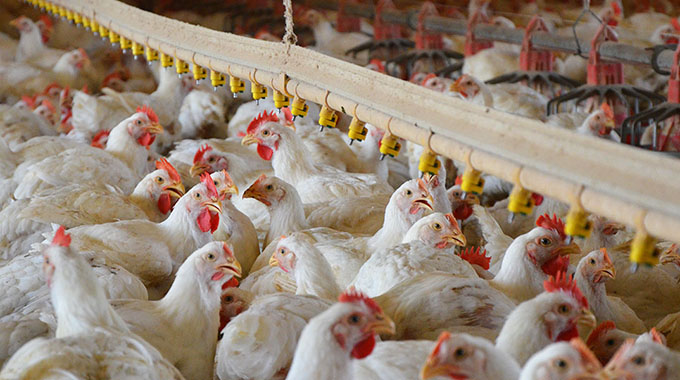
Women in Zimbabwe’s Poultry Industry: Opportunities and Challenges (2026)
Women make up 70 to 80 percent of agricultural labour in Zimbabwe. However, they face systematic exclusion from the land tenure, credit facilities, and the opportunity to scale beyond subsistence farming. Women in poultry are mostly confined to the smallholder sector, with the gender occupying just 25% of commercial poultry operations.
However, the Food and Agriculture Organisation declared 2026 the International Year of the Woman Farmer. The campaign aims to celebrate these marginalized agro-food producers and promote priority funding for them. Read on as we explore the possibilities and drawbacks for women in this industry.
Why Women Choose Poultry As their Entry Point to Agriculture
In any rural homestead or urban backyard operation, you’ll find a woman rearing the chickens. At the markets, hatcheries, and cooperatives, woman are there, producing, selling, managing, and leading.
Across sub-Saharan Africa, poultry — and chickens specifically, has long been considered women’s livestock. This is not just cultural sentiment; It is practical economics. A broiler cycle only runs for 35 days, a layer flock produces eggs that can sold daily, and roadrunner hen requires minimal purchased feed but converts household kitchen waste into meat.
Cattle, on the other hand, can be pricey as they require land and yet carry extreme disease and drought risks. Many women have no access to that kind of capital. But a small flock of chickens is something that a women with just USD 50 can start in their backyard while managing their household responsibilities.
Research published in 2025 across smallholder farming households in Eastern and Southern Africa confirmed that chickens are the one livestock category where female sole ownership is more common than joint ownership, and far more common than female ownership of cattle, goats, or pigs.
Four Factors that Enable Women to Start Poultry Projects:
- Low startup capital. You can start with five birds or a modest coop with neighbors. The barrier to entry is lower than almost any other agricultural enterprise. Basic broiler and layer starting costs, will not break the bank.
- Fast return cycles. Broilers reach market weight in 35 days. The short cycle means capital turns over quickly and this is critical when cash flow is tight. Read our guide on maximising broiler and layer profits this 2026 winter for cycle timing and margin analysis.
- Manageable from home. Chickens can be managed from home and women can incorporate such an operation with the domestic responsibilities that culture and society places on them.
- Divisible assets. You can sell one bird at a time to raise a small amount of cash. This makes poultry income flexible and responsive to immediate household needs.
The Impact of Women’s Participation in Poultry
The majority of Zimbabwe’s chicken supply is coming from backyard and peri-urban operations, rather than from large integrated commercial facilities. ZimStats stated that small-scale producers, who are mostly women farmers, accounted for 80.4 percent of Zimbabwe’s national broiler production in 2024.
This means that the performance of Zimbabwe’s poultry industry at a national level is inseparable from the performance of its female farmers. When women face barriers that reduce their productivity, the effect is not just on individual households; it ripples through national supply and price levels. In our analysis, we found that Zimbabwe’s poultry supply crisis trace directly to constraints for smallholder farmers, the majority of which are women.
Estimates from agricultural extension services suggest that women control 60 to 70 percent of backyard and village chicken production in Zimbabwe. Also, women constitute 55 to 65 percent of poultry cooperative membership. And At informal markets, 70 to 80 percent of poultry vendors are women.
Nevertheless, commercial scale women-owned operations with 1,000+ birds are estimated at only 25 to 35 percent of the sector. Running a large chicken farming operation has higher capital requirements and a whole new level of barriers. Investors and NGO programs seeking to assist women in poultry have to analyze these factors in order to come up with effective strategies.
Opportunities for Women in Poultry in 2026
Several factors are creating new opportunities for women in Zimbabwe’s poultry sector that did not exist, or were less developed, five years ago.
The International Year of the Woman Farmer
The United Nations Food and Agriculture Organisation launched 2026 as the International Year of the Woman Farmer. This programme seeks to shine the light on the impeccable contributions that women in agriculture play. It prioritises gender-responsive agricultural programming in the funding allocations of multilateral donors, development finance institutions, and NGOs operating in Zimbabwe.
For women already in the poultry sector, 2026 is the year to engage with every agribusiness programme, and respond to all NGO farming-related calls. The funding environment is unusually favourable. Check the news for updates look through our poultry events calendar for workshops and funding application deadlines relevant to women farmers.
Poultry Value Chain Financing
Women can take advantage of Poultry Value Chain Financing, a mechanization which offers specific funding for operating capital and inputs and such as feed and day-old chicks. According to a peer-reviewed study published in Multidisciplinary Scientific Work and Management Journal Jan-June 2026 issue, the PVCF is a driver in women’s empowerment.
Value chain financing generates significant socio-economic gains, including stable household income, improved nutrition, and the opportunity for ladies to reinvest and scale up their operations. The study found one challenge though. Some women default on repayments due to limited financial literacy and insufficient business skills training.
Value Chain Financing is convenient. When farmers take out a traditional micro loans, they must pay back in fixed monthly installments. But PVCF is based on production inputs and flock cycles, and therefore aligns with cash flow and market days of a poultry operation.
Roadrunner Demand Growth
Urban consumers are willing to pay premium prices for the roadrunner chicken (huku yechibhoyi) compared to broilers, and this premium has been growing. At informal markets in Harare, Bulawayo, and Gweru, roadrunners consistently command 40 to 70 percent higher prices per kilogram than broiler birds. For current pricing, see our Zimbabwe news and market intelligence section updated regularly.
Roadrunner production is historically a women-dominated enterprise. The shift in urban consumer preference toward indigenous birds is driven by taste preference, perceived health benefits, and cultural significance at occasions. This is creating a market dynamic that gives an advantage to the production system most women already use.
If you want to understand the difference between broiler and roadrunner production from a profitability standpoint, read our comprehensive guide covers both in detail.
Mobile Technology and Price Literacy
Mobile phones are making it easy for Zimbabwean ladies to access poultry markets that previously required physical travel. Women farmers can now advertise their birds on WhatsApp groups, receive payment via mobile wallets such as EcoCash, and check prevailing market prices before selling. This approach gives them more value for their flock than just negotiating with buyers who come to their doorstep.
You can also use our free chicken price analysis and find out what your birds are worth at the current market before you negotiate. For example, a woman poultry farmer in Murehwa who knows that live broilers in Harare are fetching USD 4.50 per kilogram this week will not accept USD 3.00 from an intermediary who arrives at her gate.
Challenges for Women Poultry Farmers
Women farmers still experience structural barriers, even after multiple policy reforms and development programming.
Land Tenure and the Collateral Problem
Ladies sustain 80 percent of Zimbabwe’s agricultural labour but hold only a small fraction of the country’s land rights. Approximately 50 percent of Zimbabwe consists of communal land where patriarchal norms and traditional leaders take charge. A woman typically needs a husband or a male relative to get access to the land.
These limitations directly affect women’s participation in commercial scale poultry. A large operation requires land for the fowl run, biosecurity buffer zones, and for the grain storage to enable bulk feed purchasing. Also, without formal ownership, a woman cannot use land as collateral for a bank loan or enter into farming contracts that require fixed infrastructure.
The International Center for Antimicrobial Resistance Solutions (ICARS) research on gender and biosecurity in Zimbabwe’s poultry sector, published in 2025, confirmed that women’s exclusion from land ownership is a direct barrier to biosecurity improvement — they cannot afford to implement proper measures on land they do not legally hold. See our disease management guide for biosecurity standards.
Women farmers in communal areas, can get more secure tenure by operating on a residential plots allocated by Rural District Councils (RDCs). They can also enter into cooperative arrangements where the collective holds the land or they may access A1 resettlement farm plots where female-headed households are considered for allocation.
Access to Formal Finance
Women poultry farmers without formal land title cannot provide collateral for bank loans. Therefore, most of them depend on informal microfinance such as rotating savings clubs (mukando), or family networks for capital.
As a consequence, women tend to operate smaller flocks than they are capable of managing. They cannot access upfront capital for a larger batch of day-old chicks, feed, and medication. A woman who can competently manage 500 birds but can only finance 100 is operating at 20 percent of her productive capacity. So, that is a finance gap, not a skills gap.
Feed cost is the largest driver of capital requirement. Now, Zimbabwe’s grain laws affect feed prices, setting the costs higher than they should be. And this hits smallholder women hardest. Understanding the roots of input cost helps farmers build a resilient chicken business.
Limited Training and Support for Women
Only about 15 percent of agricultural training and support services agents are women. Extension advice is disproportionately directed toward male household heads, even when the farming work is female-headed. Women-specific training on poultry management, biosecurity, feeding, and record-keeping is patchy and heavily dependent on NGO or government programs.
The ICARS project ran from January 2025 to July 2026, directly addressing small to medium scale poultry by integrating gender equity into AMR (antimicrobial resistance) biosecurity training. The project is led by the Ministry of Lands, Agriculture, Fisheries, Water and Rural Development, with the Zimbabwe Poultry Association and University of Zimbabwe as partners.
Women in the programme’s operating districts should contact their local AGRITEX office to get more information. Look up qualified extension and veterinary support in your area in the veterinary services directory.
Market Access Barriers
Women farmers in small scale poultry projects can produce quality birds. However, selling to supermarkets, processors, institutional buyers requires quality certification, and supply reliability. Informal markets are more accessible but offer lower prices without payment guarantees.
Although you get better prices, formal contract arrangements require production records and a significant amount of paperwork. You can learn more about this in our dedicated guide on market access for Zimbabwean poultry farmers. Joining a women’s poultry cooperative can connect you with other smallholder farmers and build the volume levels that formal buyers demand. And then, together you can contact buyers already active on the market through the buyers’ directory.
Male Dominance over Household Finances
Although women farmers work hard and earn significant income from poultry, this does not always give them automatic control over how that cash is spent. In many Zimbabwean households, particularly in communal areas, customs give the men the all decision making powers.
Research on PVCF found that women who keep records, manage receipts, and hold their own mobile money account (Ecocash) are more likely to retain decision-making authority over that income. Keeping records is a practical mechanism for establishing income ownership.
Again, poultry cooperatives can help women establish control over their income. When the revenue flows through a shared cooperative account, it shifts the financial control in favour of the woman farmer.
Organisations that Support Zim Women in Poultry
As a woman farmer in Zimbabwe’s poultry industry, you will certainly get it hard to secure funding or training. But you will find these resources below to be useful. See our poultry partners directory for contact details of support organizations.
Zimbabwe Poultry Association
The Zimbabwe Poultry Association (ZPA) is the primary body that advocates for commercial chicken farmers in the country. With membership, ladies can get biosecurity training and market information.
Women Farmers Association of Zimbabwe
The Women Farmers Association of Zimbabwe (WFAZ) fights for women’s land and production rights in the agricultural sector. The association engages with government on land allocation policy and connects women farmers to training and funding. This organization is particularly valuable for navigating the land tenure challenges.
ICARS Biosecurity and Gender Program
The ICARS-funded program is integrating gender equity into poultry biosecurity training and is relevant for women farmers in smallholder production. If you want to know what biosecurity read this disease management in poultry article.
Cooperative Savings Groups
For women without access to formal bank credit, the rotating savings club (Mukando or Maround) remains the most practical and immediate financing solution. A group of 10 to 20 women can each contribute a fixed amount weekly or monthly and take turns to receive the collections and use it to complete production cycle. This way they can build a meaningful operations.
Formalizing these groups into registered cooperatives under the Cooperative Societies Act [Chapter 24:05] provides legal standing, access to more credit, and a stronger negotiating position with input suppliers. Connect with registered cooperatives in your area through our farmers network.
Zimbabwe Hatcheries and Breeders
In small quantities, Day-old chicks (DOCs) are typically pricey and this is a challenge for smallholder women farmers. But from our poultry breeders directory, you can find registered hatcheries and breeders across the country that supply small-orders with quality DOCs at affordable prices.
Expert Advice for Women in Poultry
Here are some pro tips for women struggling to get into the poultry business or trying to boost their operations.
Start with roadrunners if capital is the constraint. Raising 20 to 50 roadrunner hens is relatively easy. Such a flock requires minimal startup capital, feeds largely on forage and kitchen waste, and produces income from both eggs and occasional bird sales over a sustained period. See our guide on broilers vs huku yechibhoyi.
Keep written records from day one. Record chick purchase date, feed costs, medication costs, bird deaths, and sale price per bird. This is the financial history can help you access credit from cooperative and funding from NGOs. It also establishes your income as yours, and separate from general household finances.
Join a group cooperative. Women’s cooperatives and producer groups give access to bulk input purchasing (lower feed prices), shared veterinary services, and collective marketing. Joining a group means that you have a network in place when a disease outbreak or income shock hits.
Know your prices before you sell. Check current chicken prices and trends before negotiating with any buyer. Many women smallholder farmers leave money on the table due to price illiteracy.
Vaccinate on a fixed schedule. Newcastle disease is the biggest flock killer in Zimbabwe but is preventable through well-scheduled vaccination. Vaccines costs far less than losing a flock.
Understand the local sourcing rules. Government policy on local sourcing of poultry products is actively affecting which markets are accessible and at what prices. Our article on Zimbabwe’s new local sourcing rules explains the current regulatory environment and what it means for smallholder producers looking to supply formal retail and institutional buyers.
Register your business. Registering your business, even as a sole proprietor or cooperative, opens access to contract farming arrangements with integrators. Contract farming provides guaranteed offtake and often includes subsidized inputs. This removes uncertainty for input costs and marketing.
What the Data Says About 2026 and Beyond
Zimbabwe’s poultry sector is projected to grow through to 2032 driven by urbanisation, population growth. Also sub-Saharan Africa is shifting towards chicken as an everyday protein. However, with systematic exclusion of women poultry producers from land and credit access, there is bound to be a constraint on meeting the demand.
Women account for the majority of the national smallholder output and without enough support they cannot scale their operations. Closing this gap is the most efficient lever available for growing Zimbabwe’s poultry supply.
The ZITF 2026 Produce and Poultry Hall, covered in our ZITF 2026 report, featured several women-led poultry enterprises that demonstrated exactly what scaled production looks like when structural barriers are removed. These are the operations that the industry should be replicating at provincial and district levels.
Conclusion
As declared by the Food and Agriculture Organisation, 2026 is the Year of the Woman Farmer. This means that doors are opening in terms of supportive infrastructure, funding, program, and research attention. The industry is riddled with limitations for women but advocacy groups are moving the barriers.
You can boost your potential by applying to NGOs for funding. Joining cooperatives, also unlocks many opportunities for the woman farmer, including access to credit facilities and combine marketing efforts. Stay current with poultry industry developments on our poultry news feed, and listen to practitioner interviews on the Zimbabwe Poultry Podcast.
Frequently Asked Questions
Do women in Zimbabwe have the legal right to own poultry farms?
Yes. There is no legal prohibition on women owning or operating poultry enterprises in Zimbabwe. However, cultural norms, especially in rural areas, favor the male household heads and this limits land tenure for women.
What is the best entry-level poultry enterprise for a woman with limited capital?
Starting with a small roadrunner (indigenous chicken) flock is the easiest entry point. It comes with low startup cost because the birds feed largely on household waste. Roadrunners also command premium market prices. For a direct comparison with broilers, see our broilers vs huku yechibhoyi guide.
How do I access training as a woman poultry farmer in Zimbabwe?
Contact your local AGRITEX office, the Zimbabwe Poultry Association, or women’s farmer groups in your district. The ICARS gender and biosecurity programme (running through July 2026) provides specific training for smallholder women producers. See our veterinary services directory for licensed extension and veterinary support near you.
Can I get a loan to expand my poultry operation without land as collateral?
Formal bank loans typically require collateral. Your alternatives include cooperative savings groups (mukando), NGO-supported PVCF programmes, and contract farming arrangements where the integrator provides inputs on credit against the future harvest. Our market access guide covers contract farming pathways in detail.
What diseases should I prioritise vaccinating against?
Newcastle disease is the critical vaccination for all poultry in Zimbabwe. For commercial layers, Marek’s disease vaccination is also recommended. Consult your AGRITEX extension officer or a licensed veterinarian for the full schedule. See our poultry disease management guide for the full biosecurity framework.
Where can I find buyers for my birds?
capital Start with the Zimbabwe poultry buyers directory for formal buyers already active in the market. You can also try informal markets and weekend selling opportunities at some of the braai spots in Harare.
This article is the canonical version consolidating two previously published pages on women in Zimbabwe’s poultry industry. The duplicate URL at /opportunities-for-zimbabwean-women-in-poultry/ should be 301 redirected to this page to consolidate search impressions. Part of the ChickenPrices.co.zw Social Impact and Industry Development content series.

2 responses to “ZIMBABWEAN WOMEN IN POULTRY: OPPORTUNITIES & SETBACKS 2026”
[…] Is the chicken stock business suitable for women running it from home? Yes — and it has been successfully run this way by Zimbabwean women entrepreneurs at exactly this scale. The production process requires no heavy lifting, no special strength, and aligns with a home kitchen schedule. For the broader picture of women-led poultry value-addition businesses in Zimbabwe, see our article on women in Zimbabwe’s poultry industry. […]
[…] operations — turning the by-product of one enterprise into the input for another. Our article on women in Zimbabwe’s poultry industry covers this integrated approach in more […]